
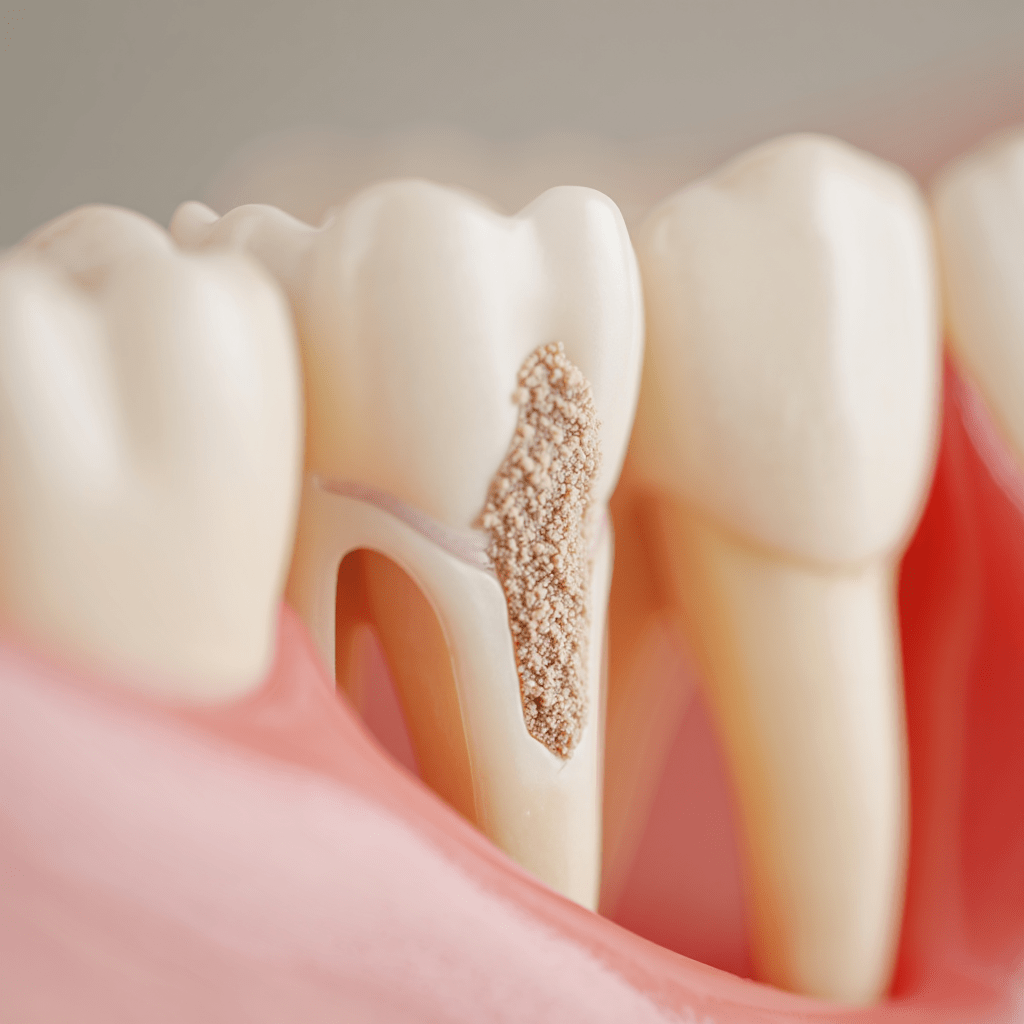
Jawbone Graft
Jaw Bone Grafting—commonly referred to as bone grafting—is a procedure used to repair or rebuild lost or insufficient bone tissue. At Dental Options Dental Clinic in Kyrenia, this method is frequently applied for pre-implant jaw preparation or to prevent bone loss after tooth loss.
Why Is Bone Grafting Necessary?
- Implant Preparation: Ensures sufficient bone is available for secure and stable dental implant placement.
- Bone Loss Restoration: Rebuilds weakened bone areas caused by tooth loss, trauma, or periodontal disease.
- Jaw Support: Maintains the natural shape and strength of the jaw.
- Sinus Lift Procedures: Provides additional bone support for upper jaw implants.
- Preventive Measure: Prevents further deterioration of the jawbone over time.
Advantages of Bone Grafting at Our Kyrenia Clinic
- High-Quality Materials: We use safe, biocompatible bone powders to support natural bone regeneration.
- Expert Surgical Team: Our experienced dentists are specialists in advanced grafting techniques.
- Digital Planning: 3D imaging ensures precise graft placement and treatment planning.
- Enhanced Implant Success: Bone grafting increases implant stability and longevity.
- Comfortable Treatment: Minimal invasive techniques and effective pain management provide a smooth experience.
For successful and long-lasting dental restorations, choose Dental Options Dental Clinic in Kyrenia for bone grafting procedures. Schedule a consultation today to find out if bone grafting and implant treatment are right for you.
When is a bone graft needed?
A bone graft is planned when there is not enough bone to hold a dental implant securely, most often after a tooth has been missing for a long time, after gum disease, or after an injury. The amount and quality of bone are measured with 3D tomography.
How bone grafting works
- 3D scan and planning: The bone volume is measured and the graft is planned.
- Procedure: Under local anaesthesia, graft material is placed where bone is missing and usually covered with a membrane.
- Healing: Over a few months the graft is gradually replaced by your own bone.
- Implant placement: Once healed, the implant is placed into the new bone.
After the procedure
Eat soft food, avoid smoking, do not rinse vigorously for the first day and follow the instructions you are given. Most people return to normal activities within a few days.
For the full picture, read our patient guide to dental implants.
Coming to Kyrenia for treatment
Our clinic is in the centre of Kyrenia (Girne), at Ataker İş Hanı on Dr. Salih Miroğlu Street. Patients living in the south of Cyprus usually reach us through one of the Nicosia crossing points, so consultations and short appointments can often be done as day trips. Visitors from the UK and Europe usually fly into Ercan or Larnaca. Opening hours are Monday to Friday 09:30–18:00 and Saturday 09:00–13:00.
Frequently asked questions
Why does the jawbone shrink after tooth loss?
The bone around a tooth is kept healthy by the forces of chewing. When a tooth is lost, that stimulation stops and the bone gradually shrinks, especially in the first months.
Is bone grafting painful?
It is done under local anaesthesia. Swelling and discomfort for a few days afterwards are normal and are usually managed with painkillers.
How long does it take to heal?
Healing usually takes a few months before an implant can be placed. Small grafts can sometimes be done at the same time as the implant.
What is a sinus lift?
In the upper back jaw, the sinus can limit the bone height. A sinus lift adds bone under the sinus floor so implants can be placed there.
Can I avoid a bone graft?
Sometimes. Shorter implants or techniques such as All-on-Four, which uses angled implants, can avoid grafting in suitable cases. Your 3D scan shows which options are possible.
contact us to find out whether you need a bone graft before implants.