
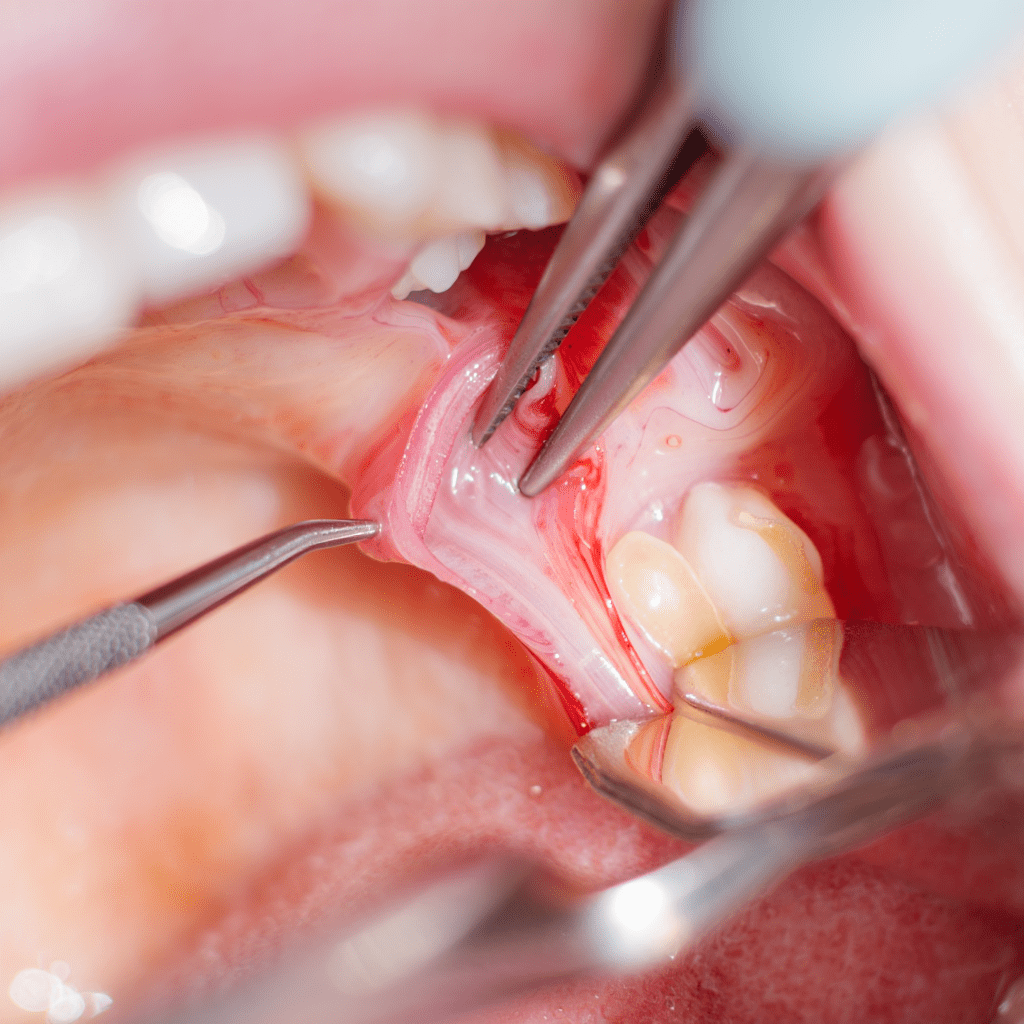
Frenectomy (Lip/Tongue Tie Removal)
Frenectomy is a minor surgical procedure that involves the removal or reshaping of the frenulum—a small fold of tissue that restricts the movement of the tongue or upper lip. At Dental Options Dental Clinic in Kyrenia, we perform safe, quick, and comfortable frenectomy procedures using modern techniques to improve oral function and overall health.
Who Commonly Requires a Frenectomy?
- Tongue-Tie (Ankyloglossia): Restricts tongue movement, potentially causing speech, swallowing, and breastfeeding difficulties in infants.
- Lip-Tie: Creates tension in the upper lip, making feeding, oral hygiene, or orthodontic treatment more challenging.
Who Can Benefit from a Frenectomy?
- Infants experiencing difficulty with breastfeeding or bottle-feeding
- Children with delayed speech development or restricted tongue mobility
- Adults with gum recession, gaps between teeth, or tension in the lips
- Orthodontic patients requiring increased flexibility in the lip or tongue region
Why Choose Dental Options in Kyrenia?
- Laser-Assisted Procedures: Advanced laser technology ensures minimal bleeding, stitch-free treatment, and faster healing.
- Painless & Quick: Most procedures are completed in minutes under local anesthesia with minimal discomfort.
- Infant & Child Expertise: We handle tongue- and lip-tie issues in babies with utmost care.
- Enhanced Oral Function: Patients notice immediate improvements in speech, feeding, and oral mobility after recovery.
- Safe & Sterile Environment: Our clinic follows strict hygiene protocols to guarantee safe surgical care.
At Dental Options Dental Clinic, we understand how even a small piece of tissue can affect daily life. We are ready to provide gentle and effective solutions for your baby, child, or yourself.
Signs a frenulum may need assessment
- The tongue cannot reach the roof of the mouth or stick out past the lips
- The tongue tip looks notched or heart-shaped
- A tight upper lip frenulum linked to a gap between the front teeth
- Gums pulling away near a tight frenulum
In babies with feeding difficulties, assessment is often coordinated with the paediatrician or a lactation consultant.
How a frenectomy is performed
- Assessment: The frenulum and the movement of the tongue or lip are examined and the need for treatment is discussed.
- Local anaesthesia: The area is numbed so the procedure is comfortable.
- Release: The tight tissue is released or reshaped, with a scalpel or laser depending on the case.
- Stitches if needed: Small stitches may be placed; many dissolve on their own.
- Follow-up: Healing is checked and exercises may be recommended to help movement.
Aftercare
Mild discomfort for a few days is common. Eat soft foods, keep the area clean as instructed and do any tongue or lip exercises your dentist recommends, as these help prevent the tissue from reattaching tightly.
Getting to our clinic in Kyrenia
Dental Options Cyprus is in central Kyrenia (Girne), at Ataker İş Hanı, Dr. Salih Miroğlu Street No: 3. Patients coming from the south of Cyprus usually travel through the Nicosia crossing points, and visitors from abroad usually fly into Ercan or Larnaca. Opening hours are Monday to Friday 09:30–18:00 and Saturday 09:00–13:00. You can call or WhatsApp us on +90 533 855 00 50.
Frequently asked questions
Is a frenectomy painful?
The procedure is done under local anaesthesia. Some soreness afterwards is normal and can usually be managed with simple pain relief.
Will speech improve straight away?
Not always. Speech depends on many factors, and some children benefit from speech therapy after the procedure.
Laser or scalpel: which is better?
Both are established methods. Your dentist chooses the technique that suits the type and thickness of the frenulum.
Can adults have a frenectomy?
Yes. Adults may need one for gum health, before orthodontic treatment or to improve tongue movement.
Contact us to arrange an assessment with our dental team. A lip frenulum is sometimes treated alongside orthodontic treatment.